

Elm Oyster
Hypsizygus ulmarius
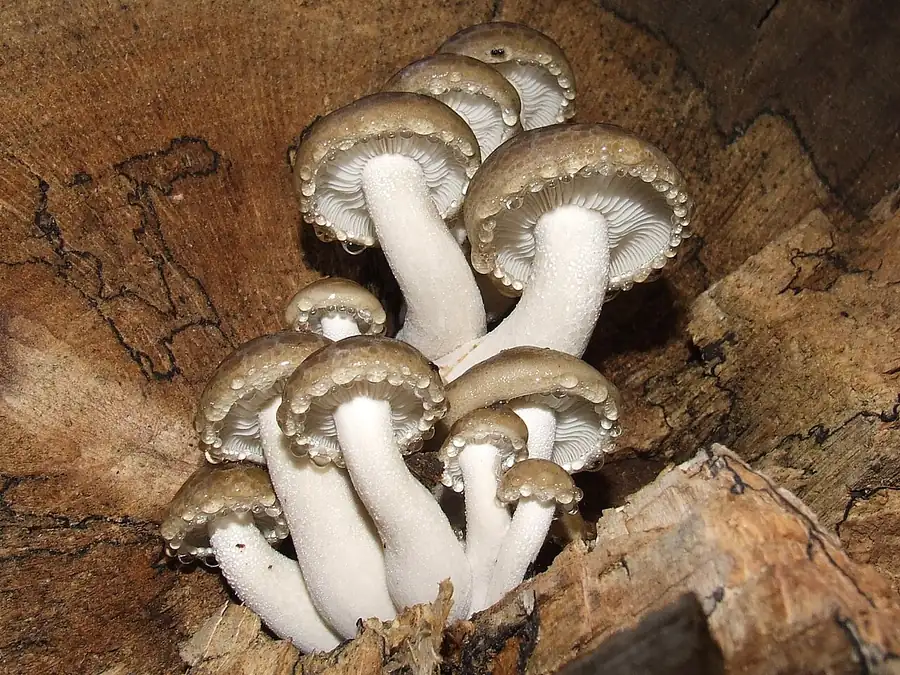
The elm oyster is a large, firm-fleshed oyster-like mushroom that grows on supplemented hardwood sawdust and fruits in cool, humid conditions.
Hypsizygus ulmarius is a wood-rotting fungus found on elms, beech, cottonwood, maple and other hardwoods across temperate Europe, Asia and North America. It looks like an oyster mushroom but has gills that are not deeply decurrent, and its flesh is firmer. In cultivation it is grown on supplemented hardwood sawdust in bags, bottles or trays, with a spawn run of about two to three weeks at 21–27 °C followed by pins when the temperature is dropped to 10–13 °C.
Cultivation parameters
Climate
| Colonization temperature | 21–27 °C |
|---|---|
| Fruiting temperature | 13–18 °C |
| Incubation humidity | 95–100% |
| Fruiting humidity | 90–98% |
| Fresh-air exchange | High |
| Light | Bright indirect (needed to trigger pins) |
| Air / CO₂ notes | Spawn run tolerates CO2 above 10,000 ppm with 0–1 air changes an hour; for pins and fruit bodies keep CO2 below about 1,000–1,500 ppm with 4–8 air changes an hour and 500–1,000 lux. |
| Cold shock | Required — Pins at 10–13 °C with 98–100% humidity after a spawn run at 21–27 °C and a rest of about a week |
Timing & substrate
| Colonization | 14–21 days |
|---|---|
| Pinning | 5–10 days |
| Maturation (pin to harvest) | 4–7 days |
| Flush interval | 7–10 days |
| Time to first flush | About 14–21 days of spawn run plus a rest of about a week, then 5–10 days to pins. |
| Primary substrate | Supplemented hardwood sawdust |
| Substrate options | Supplemented hardwood sawdust, Alder, oak or cottonwood sawdust with bran, Hardwood chips |
Spawn & substrate preparation
| Spawn types | Grain spawn, Sawdust spawn |
|---|---|
| Spawn notes | Grain spawn throughout, or sawdust spawn for outdoor beds; supplementing the sawdust improves integrity and yield. |
Practical literature-range
| Best methods | Autoclavable bags or bottles of supplemented sawdust, Partially buried hardwood logs |
|---|---|
| Difficulty | Intermediate — Grows like an oyster mushroom on supplemented hardwood sawdust, but fruits at a cool 10–13 °C and needs close attention to the picking stage |
Taxonomy & ecology
| Scientific name | Hypsizygus ulmarius |
|---|---|
| Also known as | Elm mushroom, Shirotamogitake, White elm mushroom, Elm leech |
| Synonyms | Pleurotus ulmarius, Lyophyllum ulmarium |
| Family | Lyophyllaceae |
| Order | Agaricales |
| Genus | Hypsizygus |
| Lifestyle | Saprotroph |
| Natural habitat | Elms, beech, cottonwood, maple, willow and oak, usually as a saprotroph and sometimes on dying trees |
| Native range | Temperate forests of Europe, Asia and North America |
| Cultivation status | Commercially cultivated |
How to grow Elm Oyster, step by step
- Prepare the substrate. Mix hardwood sawdust and chips with bran, bag it and sterilise it.
- Inoculate. Add grain spawn and incubate at 21–27 °C with 95–100% humidity for 14–21 days.
- Rest and initiate. Rest the colonised bags about a week, then drop the temperature to 10–13 °C and raise humidity to 98–100%.
- Fruit. Provide 4–8 air changes an hour and 500–1,000 lux at 13–18 °C and 90–98% humidity.
- Harvest. Pick large caps before heavy sporulation and expect a second flush 7–10 days later.
Growing notes
Stamets reports yields of about 1/2 to 1 lb of fresh mushrooms from 5 lb of moist sawdust, chips and bran. Fruit bodies keep growing in mass after the cap becomes broadly convex, so picking too early costs yield; he prefers caps with at least 2 inches of flesh at the disc, harvested before heavy sporulation. He reports a lower spore load than most oysters and describes the flavour and texture as better than common oyster mushrooms. Keep CO2 below 1,000–1,500 ppm with 4–8 air changes an hour and 500–1,000 lux during pinning and fruiting. Two crops follow 7–10 days apart.
Questions about growing Elm Oyster
Is the elm oyster the same as the oyster mushroom?
No. It is a different genus, Hypsizygus, and looks similar but has firmer flesh and gills that are not deeply decurrent. It is grown in much the same way on supplemented hardwood sawdust.
What temperature does the elm oyster fruit at?
Pins form at 10–13 °C and fruit bodies develop at 13–18 °C, after a spawn run at 21–27 °C.
How long is the spawn run?
About 14–21 days, followed by a rest of about a week before pins are induced.
What substrate works best?
Oak, alder or cottonwood sawdust supplemented with rye, rice or wheat bran; alder sawdust, chips and bran gave about 1/2–1 lb of fresh mushrooms per 5 lb of moist substrate in Stamets's trials.