

Nameko
Pholiota microspora
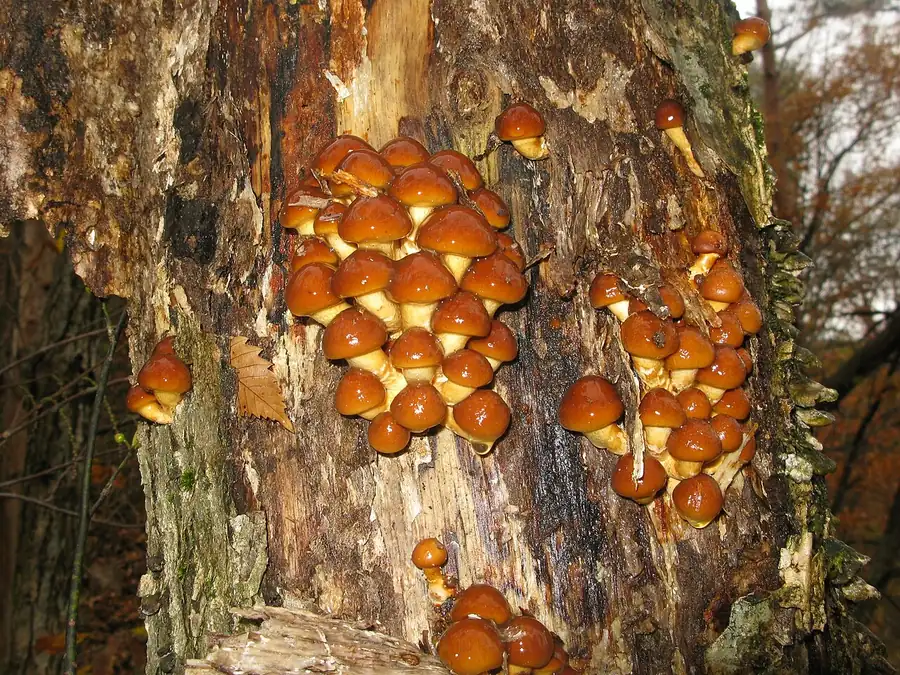
Nameko is a small, amber-brown mushroom with a slightly slimy cap, grown on sterilised sawdust bags that fruit at cool temperatures and very high humidity.
Pholiota microspora, known as nameko, is used in Japanese miso soup and nabemono and is sold as grow kits in some countries. In a 2019 Chinese trial, 750 g bags of poplar sawdust, wheat bran, cornmeal, soybean meal, lime and gypsum at 58–60% moisture were autoclaved at 121 °C for two hours, incubated at 25 °C in the dark, and then fruited at 14–18 °C and 93–96% humidity with CO2 below 2,000 ppm and 50–500 lux of light for 12 hours a day.
Cultivation parameters
Climate
| Colonization temperature | 25 °C |
|---|---|
| Fruiting temperature | 14–18 °C |
| Fruiting humidity | 93–96% |
| Air / CO₂ notes | In a 2019 trial the bags were incubated at 25 °C in the dark, then fruited at 14–18 °C and 93–96% humidity with CO2 below 2,000 ppm and 50–500 lux for 12 hours a day. |
| Cold shock | Not required |
Timing & substrate
| Primary substrate | Poplar sawdust or wood chips with corn stalks, wheat bran and cornmeal |
|---|---|
| Substrate options | Poplar sawdust, Corn stalks, Wheat bran, Cornmeal, Soybean meal, Logs, Sawdust with rice bran |
Spawn & substrate preparation
| Substrate moisture | 58–60% |
|---|
Practical literature-range
| Difficulty | Intermediate — Needs sterilised sawdust bags and cool, very humid fruiting conditions |
|---|
Taxonomy & ecology
| Scientific name | Pholiota microspora |
|---|---|
| Also known as | Pholiota nameko, Slippery mushroom |
| Synonyms | Pholiota nameko, Collybia nameko, Kuehneromyces nameko |
| Family | Strophariaceae |
| Order | Agaricales |
| Genus | Pholiota |
| Lifestyle | Saprotroph |
| Cultivation status | Commercially cultivated |
How to grow Nameko, step by step
- Mix the substrate. Blend poplar sawdust (or sawdust with corn stalks) with wheat bran, cornmeal, soybean meal, lime and gypsum at 58–60% moisture.
- Bag and sterilise. Fill 750 g bags and autoclave at 121 °C for 120 minutes.
- Inoculate and incubate. Inoculate under clean conditions and keep the bags at 25 °C in the dark until colonised.
- Induce fruiting. Move to 14–18 °C with 93–96% humidity, CO2 below 2,000 ppm and 50–500 lux for 12 hours a day.
- Harvest. Pick the small clusters; the best trial formula gave 275.66 g per bag.
Growing notes
The same trial found that part of the sawdust can be replaced with corn stalks. A mixture of 38% wood chips and 38% corn stalks gave the best yield, 275.66 g per bag, which was 6.6% above the all-sawdust control. Treat the figures as one data point from one strain. This is a cool-weather crop, so it suits a cellar or a cooled room better than a warm kitchen.
Questions about growing Nameko
What temperature does nameko need?
A 2019 trial incubated at 25 °C in the dark and fruited at 14–18 °C with 93–96% humidity.
What substrate does nameko use?
Poplar sawdust with wheat bran, cornmeal, soybean meal, lime and gypsum; corn stalks can replace part of the sawdust.
How much does a nameko bag yield?
The best trial formula gave 275.66 g per 750 g bag.
How much CO2 can nameko tolerate?
The trial kept CO2 below 2,000 ppm during fruiting.
Are nameko kits available?
Wikipedia notes that in some countries nameko is sold in kit form.