

Porcini
Boletus edulis
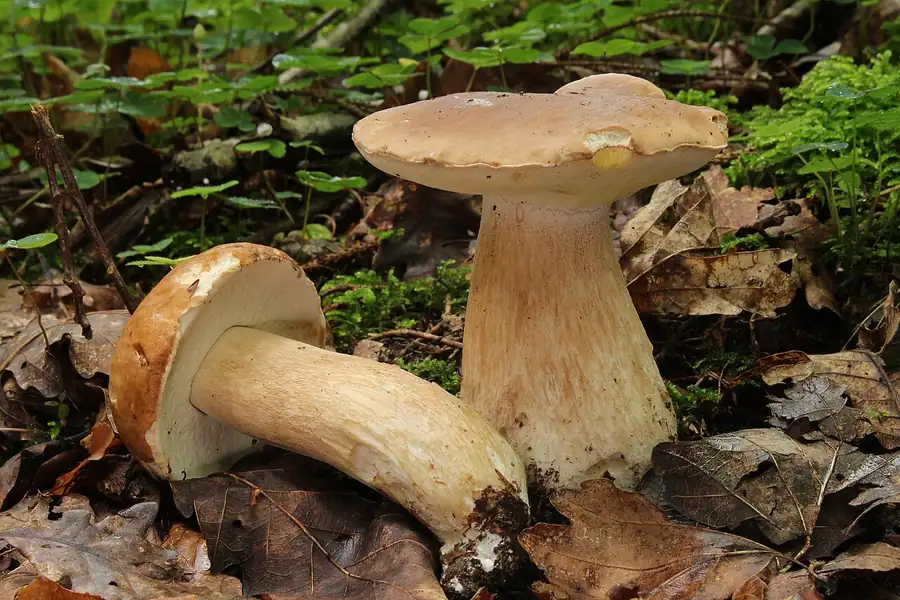
Porcini cannot be cultivated on substrate. The fungus partners with trees, and its mycorrhizae have so far been produced only in the laboratory.
Boletus edulis forms ectomycorrhizae with trees, so it cannot be grown in a bag of straw or sawdust. A 2021 review states that mycorrhizal synthesis for porcini has been obtained only in vitro, and that Boletus mycelium can be difficult to maintain in culture. New Zealand researchers tried an alternative, the mother plant technique, in which pine seedlings grow beside productive oak trees and pick up porcini from the roots; an experimental porcini and pine orchard was planted in 2007.
Cultivation facts
Taxonomy & ecology
| Scientific name | Boletus edulis |
|---|---|
| Also known as | King bolete, Penny bun, Cep, Steinpilz |
| Family | Boletaceae |
| Order | Boletales |
| Genus | Boletus |
| Lifestyle | Mycorrhizal |
| Cultivation status | Not cultivable on prepared substrate |
Growing notes
All commercial porcini come from the wild. If you read about porcini kits or spawn, treat the claim with caution. This is research, not a home project. This page covers cultivation only and cannot help identify wild mushrooms or tell you whether a mushroom is safe to eat.
Questions about growing Porcini
Can I grow porcini at home?
No. Porcini are mycorrhizal and need living trees; reliable cultivation does not exist.
Has anyone grown porcini in a lab?
Researchers have formed mycorrhizae with porcini in vitro, according to a 2021 review, but not reliable fruiting after planting.
What is the mother plant technique?
Seedlings of a host tree are grown beside trees that already produce the mushroom so that they pick up the fungus on their roots.
Are porcini kits real?
We know of no evidence that they work. Ask for independent evidence of harvests.