

Almond Mushroom
Agaricus subrufescens
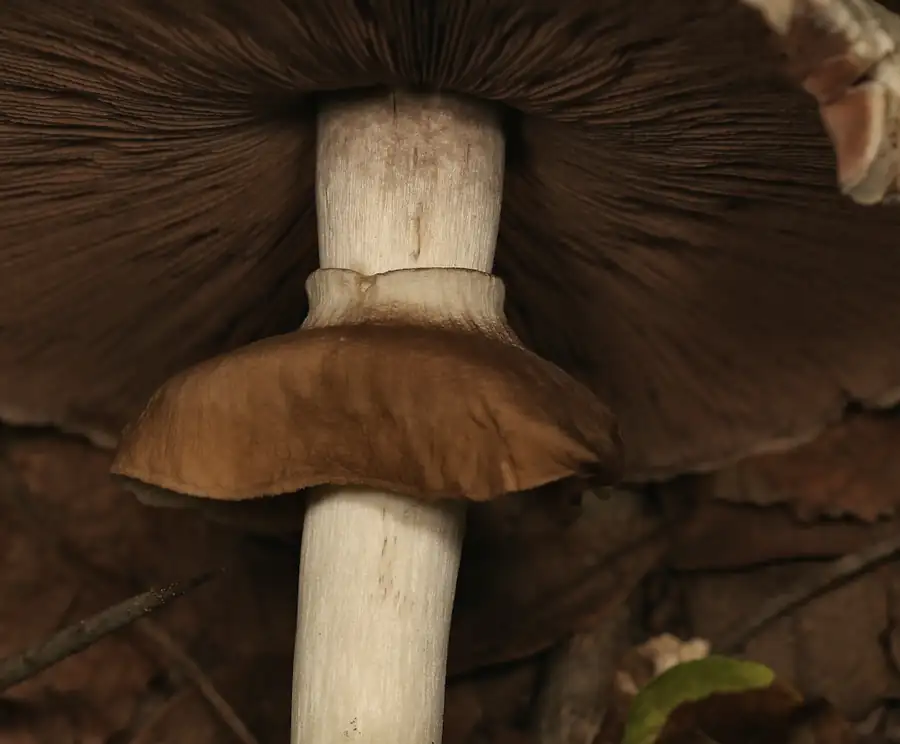
The almond mushroom, or sun mushroom, is grown like the button mushroom: on composted substrate under a casing layer, with a temperature drop to trigger fruiting.
Agaricus subrufescens belongs to the same genus as the button mushroom. In a 2020 trial the compost was held at 28 °C from spawning until the day after ruffling, then the air was dropped to 20 °C for fruiting while the compost stayed at 26 °C with 700 ppm CO2 during harvest. The whole crop cycle was 85 days with four flushes. The paper notes that authors disagree on the right primordia temperature, using 20 °C, 23 °C or 24–26 °C.
Cultivation parameters
Climate
| Colonization temperature | 28 °C |
|---|---|
| Fruiting temperature | 20 °C |
| Air / CO₂ notes | In a 2020 compost trial the compost was held at 28 °C from spawning until the day after ruffling, the air was dropped to 20 °C for fruiting, and the compost was kept at 26 °C with 700 ppm CO2 during harvest. Authors cited in the paper use 20 °C, 23 °C or 24–26 °C for primordia. |
| Cold shock | Required — Lowering the compost temperature from 28 to 20 °C triggered primordia, either by 2 °C a day or in one day |
Timing & substrate
| Primary substrate | Composted straw-based substrate with a limed casing layer |
|---|---|
| Substrate options | Compost, Casing layer |
Practical literature-range
| Best methods | Composted substrate in trays or beds with a casing layer |
|---|---|
| Difficulty | Advanced — Grown on composted substrate with a casing layer, like the button mushroom, and needs temperature steps and CO2 control |
Taxonomy & ecology
| Scientific name | Agaricus subrufescens |
|---|---|
| Also known as | Sun mushroom, Royal sun agaricus, Himematsutake, Agaricus blazei |
| Synonyms | Agaricus rufotegulis |
| Family | Agaricaceae |
| Order | Agaricales |
| Genus | Agaricus |
| Lifestyle | Saprotroph |
| Cultivation status | Commercially cultivated |
How to grow Almond Mushroom, step by step
- Prepare compost. Use a composted straw-based substrate, optionally supplemented, as for the button mushroom.
- Spawn and run. Spawn the compost and hold it at about 28 °C until colonized.
- Case and ruffle. Apply a limed casing layer and ruffle it to mix the mycelium through the casing.
- Trigger fruiting. Lower the temperature from 28 to about 20 °C, either gradually or in one day.
- Harvest. Hold compost near 26 °C with CO2 around 700 ppm and pick before the veil opens.
Growing notes
Three techniques mattered in the trial. Supplementing the compost improved yield by up to 15%, ruffling the casing layer (mixing the mycelium through it) raised biological efficiency by 21%, and reducing the temperature in one day rather than by 2 °C a day ended the crop three days earlier. The work was done on commercial-style compost, so it fits growers with a composting setup more than a hobbyist with a bucket.
Questions about growing Almond Mushroom
What temperature does the almond mushroom need?
A 2020 trial held compost at 28 °C during spawn run and dropped the air to 20 °C to trigger fruiting, with the compost at 26 °C during harvest.
How long is the crop cycle?
The trial's cycle lasted 85 days and gave four flushes.
Does it need a casing layer?
Yes, like the button mushroom, a limed casing layer on top of the colonized compost helps induce primordia.
What is ruffling?
Ruffling mixes the mycelium growing in the casing through the whole depth of the casing, which gives better control of the first flush and raised biological efficiency by 21% in the trial.
Is it the same as Agaricus blazei?
Agaricus blazei is a name used for this species, but it is listed as an illegitimate synonym. Agaricus subrufescens is the accepted name.