

Cordyceps militaris
Cordyceps militaris
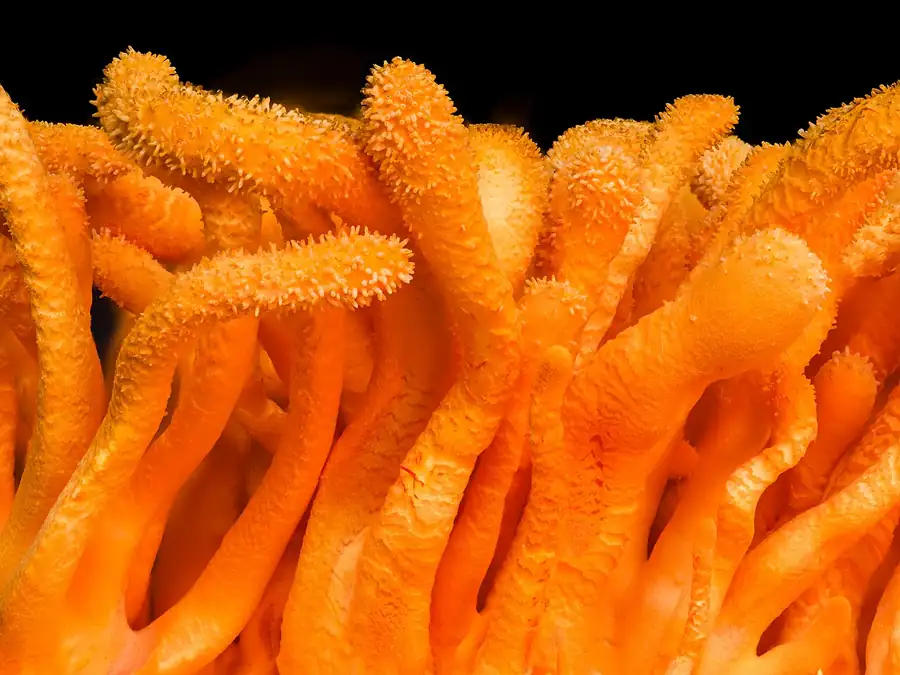
Cordyceps militaris is a fungus that is grown on grain in controlled containers; it prefers cool temperatures and a light cycle, and stops growing above about 27 °C.
A 2025 review reports that most Cordyceps militaris cultures had a growth optimum of 20 °C, with one Chinese isolate at 25 °C. Growth was impeded at 27.5 °C and ceased at 30 °C, while all isolates grew at 5–15 °C. In cultivation, the mycelial stage runs in the dark at 19–21 °C for one to two weeks, after which light–dark cycles trigger fruiting: 500–1000 lux for 8–12 hours a day at 16–23 °C and 70–95% relative humidity. Substrates include rice, wheat and oat, and mixed grain–insect media.
Cultivation parameters
Climate
| Colonization temperature | 19–21 °C |
|---|---|
| Overall cultivation temperature | 5–27.5 °C |
| Fruiting temperature | 16–23 °C |
| Fruiting humidity | 70–95% |
| Air / CO₂ notes | Most cultures had a growth optimum of 20 °C; growth was impeded at 27.5 °C and stopped at 30 °C. A review reports a dark mycelial stage at 19–21 °C for one to two weeks, then 500–1000 lux for 8–12 hours a day at 16–23 °C and 70–95% humidity. |
| Cold shock | Not required |
Timing & substrate
| Primary substrate | Rice, wheat or oat grain |
|---|---|
| Substrate options | Rice, Wheat, Oat, Mixed grain and insect substrates |
Practical literature-range
| Best methods | Grain-based solid-state culture in containers with a light cycle |
|---|---|
| Difficulty | Advanced — Needs cool, light-controlled conditions and grain-based substrate; temperatures above about 27 °C stop growth |
Taxonomy & ecology
| Scientific name | Cordyceps militaris |
|---|---|
| Also known as | Scarlet caterpillar club, Orange caterpillar fungus |
| Synonyms | Clavaria militaris, Sphaeria militaris |
| Family | Cordycipitaceae |
| Order | Hypocreales |
| Genus | Cordyceps |
| Lifestyle | Parasite |
| Cultivation status | Commercially cultivated |
How to grow Cordyceps militaris, step by step
- Prepare the grain substrate. Use rice, wheat or oat in containers and sterilize them.
- Inoculate. Add culture and incubate in the dark at 19–21 °C for one to two weeks.
- Start the light cycle. Give 500–1000 lux for 8–12 hours a day.
- Hold the fruiting conditions. Keep 16–23 °C and 70–95% humidity, and never above about 27 °C.
- Harvest. Pick the fruiting bodies once they have developed.
Growing notes
Heat is the main hazard: keep the room well below 27 °C. Liquid culture does not need light cycles or strict humidity control and shortens production from about 60 days to 15, but it yields mycelium rather than fruiting bodies. This page is about cultivation only; the site makes no health claims for any species.
Safety notes
- This page covers cultivation only and makes no health claims.
Questions about growing Cordyceps militaris
What temperature does Cordyceps militaris need?
Most cultures grew best at about 20 °C. Growth was impeded at 27.5 °C and stopped at 30 °C. Fruiting is reported at 16–23 °C.
What substrate does it use?
Solid-state culture on grains such as rice, wheat or oat; mixed grain and insect substrates are also studied.
Does it need light?
Yes, for fruiting: 500–1000 lux for 8–12 hours a day, after a dark mycelial stage of one to two weeks.
What humidity does it need?
70–95% relative humidity during fruiting, according to the review.
Is it hard to grow?
It is considered an advanced crop because of the narrow temperature window and the light cycle.