

Snow Fungus
Tremella fuciformis
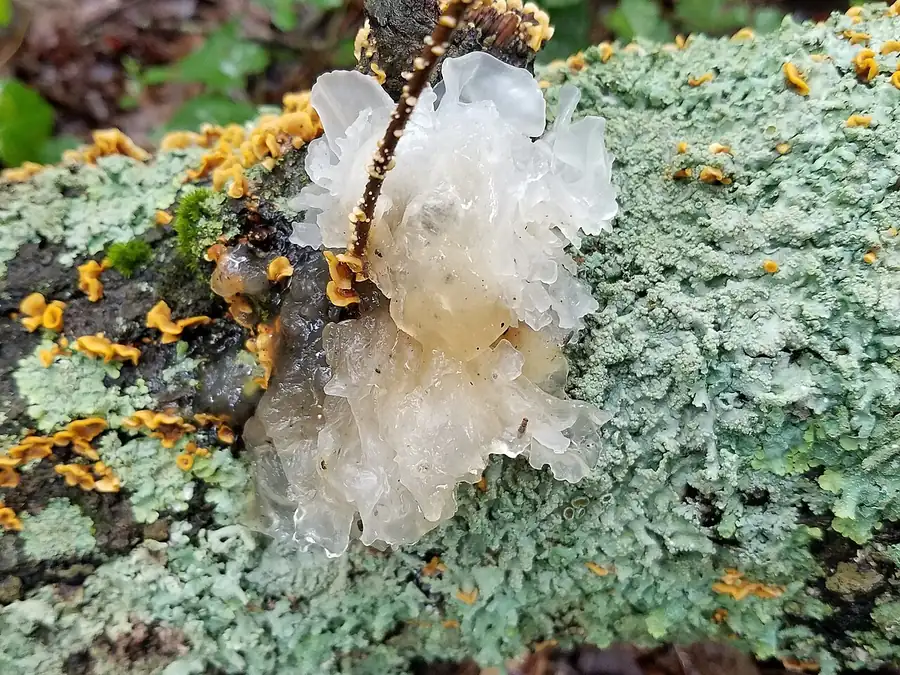
Snow fungus is a frilly, translucent white mushroom grown on sawdust or cottonseed hulls in China, and it only fruits well together with a companion fungus.
Tremella fuciformis is a jelly fungus that lives in association with another fungus, Annulohypoxylon stygium, on wood. In a 2026 Chinese bag trial, substrates at 55–60% moisture were cultivated at 20–25 °C and 80–90% relative humidity for 43 days. Five substrates were compared: cottonseed hulls, Machilus pauhoi sawdust, lotus seed hulls, Corethrodendron scoparium sawdust and palm fibre. They differed in fresh and dry weight, texture and nutritional composition.
Cultivation parameters
Climate
| Overall cultivation temperature | 20–25 °C |
|---|---|
| Fruiting temperature | 20–25 °C |
| Fruiting humidity | 80–90% |
Timing & substrate
| Time to first flush | About 43 days in a 2026 Chinese bag trial. |
|---|---|
| Primary substrate | Cottonseed hulls, hardwood sawdust, lotus seed hulls or palm fibre with wheat bran and gypsum |
| Substrate options | Cottonseed hulls, Machilus pauhoi sawdust, Lotus seed hulls, Palm fibre, Wheat bran |
Spawn & substrate preparation
| Substrate moisture | 55–60% |
|---|
Practical literature-range
| Best methods | Bags with a companion-fungus spawn (liquid or solid) |
|---|---|
| Difficulty | Advanced — It grows together with a companion fungus, so spawn is specialised and not a simple one-species culture |
Taxonomy & ecology
| Scientific name | Tremella fuciformis |
|---|---|
| Also known as | Snow ear, Silver ear fungus, White jelly mushroom, White cloud ears |
| Synonyms | Nakaiomyces nipponicus |
| Family | Tremellaceae |
| Order | Tremellales |
| Genus | Tremella |
| Lifestyle | Parasite |
| Natural habitat | Grows in association with the fungus Annulohypoxylon stygium on wood; widespread, especially in the tropics |
| Cultivation status | Commercially cultivated |
How to grow Snow Fungus, step by step
- Prepare the substrate. Mix cottonseed hulls, sawdust, lotus seed hulls or palm fibre with wheat bran and gypsum and bring the moisture to 55–60%.
- Heat-treat and bag. Fill bags and sterilise them following your supplier's schedule.
- Inoculate with the right spawn. Use spawn that carries both Tremella fuciformis and its companion fungus Annulohypoxylon stygium.
- Grow. Hold 20–25 °C and 80–90% humidity.
- Harvest. The trial ran 43 days to harvest; pick the frilly fruit bodies when fully formed.
Growing notes
Because the strain depends on its companion fungus, the spawn is not a simple single-species culture. A 2025 study found that liquid spawn made by pre-culturing pure Tremella and Annulohypoxylon stygium mycelia gave 608.2 g of fruiting bodies, 11.1% more than solid spawn, with steady yields across batches, while a standard liquefied spawn gave 502.4 g per kg of dry substrate with large batch-to-batch variation. For a home grower this is a specialist crop: ask the supplier whether their spawn includes the companion fungus.
Questions about growing Snow Fungus
What conditions does snow fungus need?
A 2026 bag trial used 20–25 °C and 80–90% relative humidity for 43 days, with the substrate at 55–60% moisture.
What substrate does it grow on?
Cottonseed hulls, Machilus pauhoi sawdust, lotus seed hulls, Corethrodendron scoparium sawdust and palm fibre were compared in one trial, with wheat bran and gypsum.
Why is snow fungus hard to grow?
It grows together with a companion fungus, Annulohypoxylon stygium, so spawn has to carry both organisms.
How much does it yield?
A liquefied-spawn trial gave 502.4 g of fruiting bodies per kg of dry substrate, and a pure co-culture liquid spawn gave 608.2 g, 11.1% more than solid spawn.
Is snow fungus a commercial crop?
Yes, it is cultivated commercially in China; Wikipedia notes that cultivation has made it less expensive.