

Paddy Straw Mushroom
Volvariella volvacea
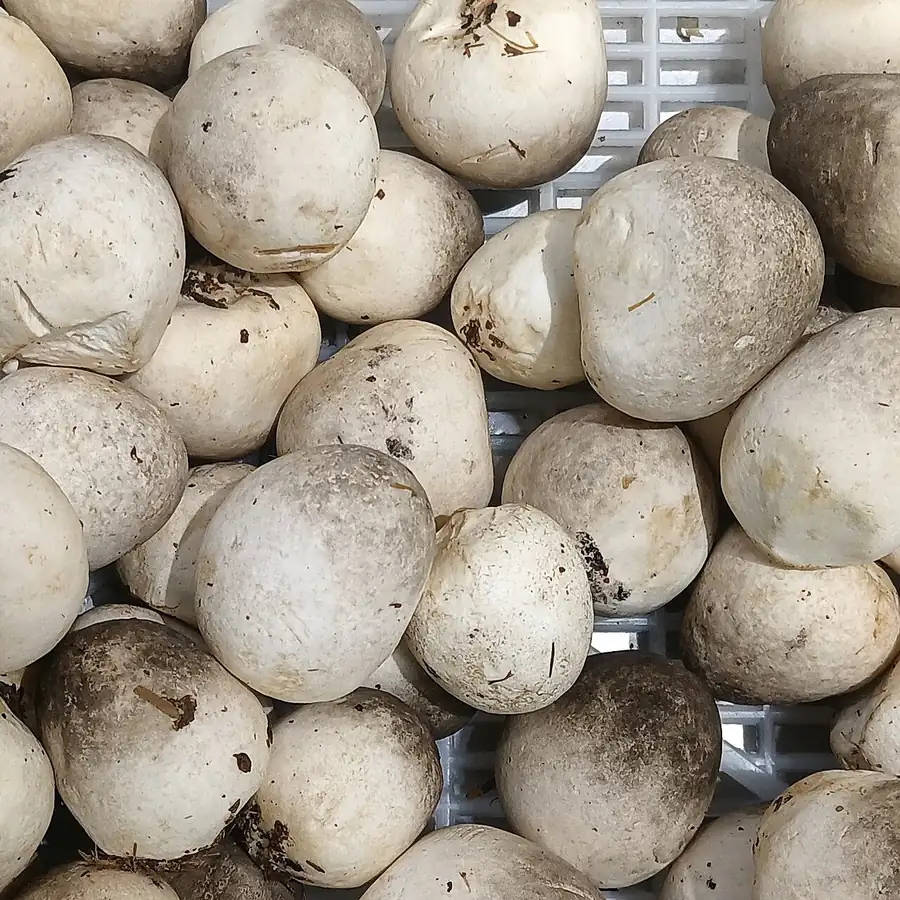
The paddy straw mushroom is the fastest and warmest of the common cultivated species: it grows on rice straw or palm fruit bunch fibre at 29–37 °C and can be picked within about a week of inoculation.
Volvariella volvacea is a tropical and subtropical saprotroph cultivated across East and Southeast Asia. The FAO training manual lists a cultivation temperature interval of 29–37 °C for the Thai white strain and 28–38 °C for the Taiwanese black strain, in summer and the rainy season, using a plot (bed) method. The mycelium takes 3–4 days and the fruiting bodies 4–5 days, with harvests about 7–9, 14–16 and 21–23 days after inoculation. A 2025 trial on soaked empty fruit bunch pellets used 65–70% moisture, a 28-day cycle and 85–90% humidity.
Cultivation parameters
Climate
| Overall cultivation temperature | 29–37 °C |
|---|---|
| Fruiting temperature | 29–37 °C |
| Air / CO₂ notes | The FAO manual gives a cultivation temperature interval of 29–37 °C for the Thai white strain and 28–38 °C for the Taiwanese black strain, in summer and rainy season. |
| Cold shock | Not required |
Timing & substrate
| Colonization | 3–4 days |
|---|---|
| Primary substrate | Rice straw or empty palm fruit bunch |
| Substrate options | Rice straw, Empty palm oil fruit bunch fibres |
Spawn & substrate preparation
| Substrate moisture | 65–70% |
|---|
Practical literature-range
| Best methods | Plot (bed) method outdoors or in warm sheds |
|---|---|
| Difficulty | Intermediate — Needs high, steady warmth and fast, well-timed picking; the crop is short and unforgiving of cold |
Taxonomy & ecology
| Scientific name | Volvariella volvacea |
|---|---|
| Also known as | Straw mushroom, Chinese mushroom |
| Synonyms | Agaricus volvaceus |
| Family | Pluteaceae |
| Order | Agaricales |
| Genus | Volvariella |
| Lifestyle | Saprotroph |
| Native range | Tropical and subtropical regions; cultivated across East and Southeast Asia |
| Cultivation status | Commercially cultivated |
How to grow Paddy Straw Mushroom, step by step
- Prepare the substrate. Soak rice straw or palm fruit bunch fibre to about 65–70% moisture and press out the excess water.
- Build the bed. Layer the substrate in a bed and add spawn, following the plot method described by the FAO.
- Keep it warm. Aim for 29–37 °C, the interval the FAO manual gives for the Thai white strain.
- Control humidity. Spray water to hold humidity between 75 and 90%, keeping water out of the substrate as much as possible.
- Harvest early and often. Pick at the right stage; the FAO lists harvests at about 7–9, 14–16 and 21–23 days after inoculation.
Growing notes
This is a warm-weather crop, so it suits tropical climates or heated rooms and does poorly when it is cold. Because the cycle is so short, check the beds every day and pick on time; the mushroom goes through button, egg and elongation stages. Keep humidity between 75 and 90% and do not let water get into the substrate more than needed. Different sources use different fruiting temperatures (the 2025 trial held 23–27 °C), so treat these as ranges to test with your strain.
Questions about growing Paddy Straw Mushroom
What temperature does the paddy straw mushroom need?
The FAO manual gives 29–37 °C for the Thai white strain and 28–38 °C for the Taiwanese black strain.
How fast does it grow?
The mycelium takes about 3–4 days and the fruiting bodies 4–5 days; the FAO manual lists harvests at roughly 7–9, 14–16 and 21–23 days after inoculation.
What substrate does it use?
Rice straw is the traditional choice in China and India; empty palm oil fruit bunches are used in Malaysia and Indonesia.
What humidity is best?
Keep humidity between 75 and 90%; a 2025 trial held 85–90%.
Can I grow it at home in a cool climate?
Only with a warm space. It is a tropical species that needs temperatures near 29–37 °C, so it is not a good fit for unheated rooms.