

Abalone Oyster
Pleurotus cystidiosus
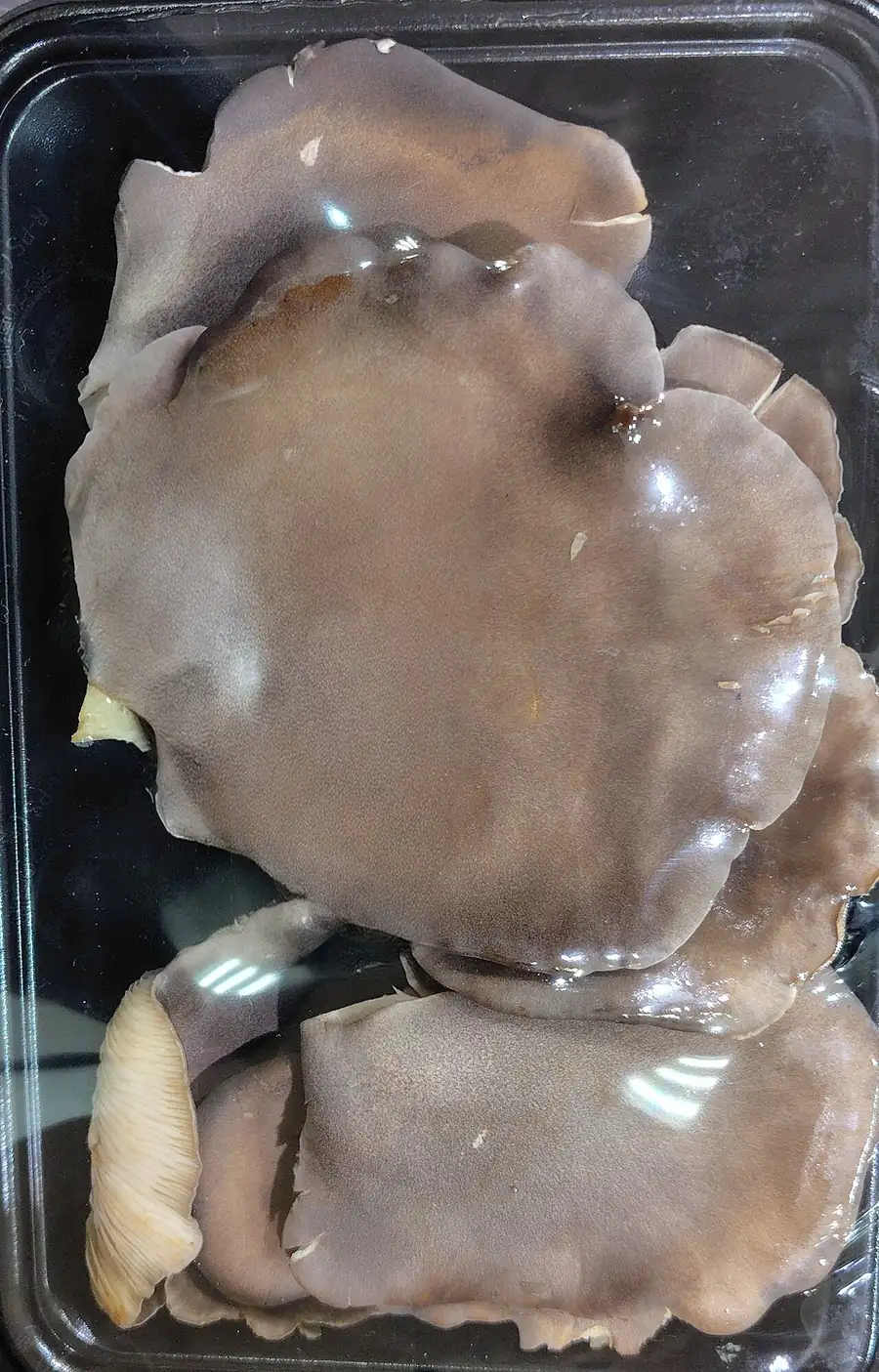
The abalone oyster is a dark oyster-type mushroom grown on corncob, bagasse or sawdust bags; it colonizes slowly and gives about three flushes.
Pleurotus cystidiosus is an edible oyster species described by Orson K. Miller Jr. in 1969. In a Taiwanese bag trial, incubation ran at 28 °C and 60–70% humidity in the dark, and cropping at 24 °C with humidity at about 90% or above. Colonization took 48–55 days, longer than the 30–40 days of common oyster in the same trial, and the strain gave three flushes. The FAO manual lists 23–33 °C for the cream strain and 20–30 °C for the black strain in Thailand.
Cultivation parameters
Climate
| Colonization temperature | 28 °C |
|---|---|
| Overall cultivation temperature | 20–33 °C |
| Fruiting temperature | 24 °C |
| Fruiting humidity | 90–95% |
| Air / CO₂ notes | In a Taiwanese bag trial, incubation was at 28 °C and 60–70% humidity in the dark, then cropping at 24 °C with humidity about 90% or above. The FAO manual lists 23–33 °C for the cream strain and 20–30 °C for the black strain in Thailand. In an agar study the mycelium grew best at 28 °C, then 32 and 24 °C, and was thin at 16 and 36 °C. |
| Cold shock | Not required |
Timing & substrate
| Colonization | 48–55 days |
|---|---|
| Primary substrate | Corncob, sugarcane bagasse or sawdust |
| Substrate options | Corncob, Sugarcane bagasse, Acacia sawdust |
Practical literature-range
| Best methods | Supplemented lignocellulosic substrate bags |
|---|---|
| Difficulty | Intermediate — Slower to colonize than common oysters and gives fewer flushes |
Taxonomy & ecology
| Scientific name | Pleurotus cystidiosus |
|---|---|
| Also known as | Abalone mushroom, Maple oyster mushroom |
| Family | Pleurotaceae |
| Order | Agaricales |
| Genus | Pleurotus |
| Lifestyle | Saprotroph |
| Cultivation status | Commercially cultivated |
How to grow Abalone Oyster, step by step
- Prepare the substrate. Use corncob, bagasse or sawdust, mixed with supplements, and fill bags.
- Sterilize and spawn. Sterilize the bags and add spawn.
- Incubate. Hold 28 °C at 60–70% humidity in the dark for about 48–55 days.
- Fruit. Move to a cropping room at about 24 °C and 90% or higher humidity.
- Harvest. Pick each flush; expect about three.
Growing notes
On corncob, bagasse and sawdust the trial reported 182–201 g per bag in total and a biological efficiency of 36–50%, lower than the common oyster in the same experiment. In a separate agar study the mycelium grew best at 28 °C, with 32 °C and 24 °C next, and thin growth at 16 °C and 36 °C. Corncob and bagasse gave the highest yields and sawdust alone the lowest.
Questions about growing Abalone Oyster
What temperature does the abalone oyster need?
A bag trial incubated at 28 °C and cropped at 24 °C. The FAO manual gives 23–33 °C (cream) and 20–30 °C (black).
How long does it take to colonize?
48–55 days in the Taiwanese trial, longer than common oyster.
How many flushes does it give?
The trial reported three flushes, with most of the yield in the first.
How much does it yield?
Total yield was 182–201 g per bag and biological efficiency 36–50% in the trial.
What substrate is best?
Corncob and sugarcane bagasse gave the best yield; sawdust alone gave the lowest.