

King Tuber Oyster
Pleurotus tuber-regium
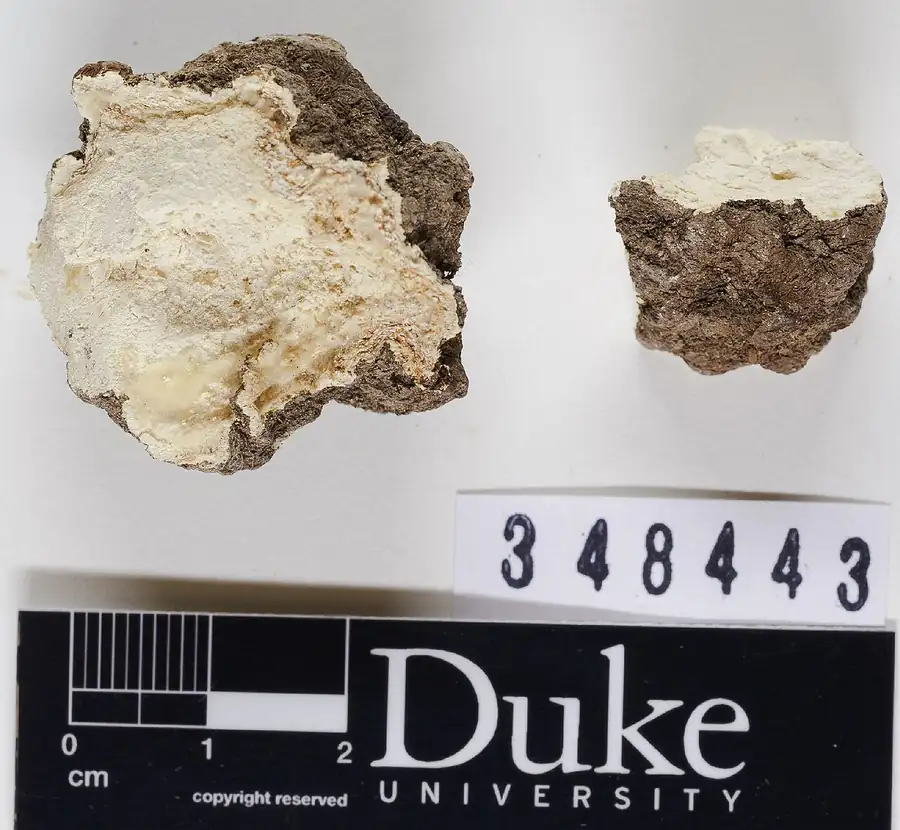
The king tuber oyster is a tropical oyster that forms a hard underground sclerotium; growers raise the sclerotia in bags at about 30 °C and can then bury them to get mushrooms.
Pleurotus tuber-regium is a white-rot fungus native to tropical Africa and the Australasian-Pacific region. Unlike most cultivated mushrooms, it has a sclerotium stage, a compact mass of mycelium up to 30 cm across that survives dry seasons. In Nigeria and elsewhere the sclerotia are collected for food, and a university research group developed simple cultivation methods using agricultural wastes. Spawn run is fastest at 30 °C and above 80% humidity and takes 20–30 days, and sclerotia are ready in bags within about 12 weeks with fast strains. Light is not needed for sclerotia to form.
Cultivation parameters
Climate
| Colonization temperature | 30 °C |
|---|---|
| Fruiting temperature | 25 °C |
| Incubation humidity | 80–100% |
| Fruiting humidity | 85–100% |
| Air / CO₂ notes | Spawn run is fastest at 30 °C and above 80% humidity and takes 20–30 days; sclerotia need no light and form in bags within about 12 weeks. To obtain mushrooms, sclerotia are soaked for 6–12 hours, buried in peat, sand or soil, kept above 85% humidity and fruit in 5–15 days, with 25 °C ideal and harvest 3–5 days after emergence. |
| Cold shock | Not required |
Timing & substrate
| Colonization | 20–30 days |
|---|---|
| Time to first flush | Sclerotia form in bags in about 12 weeks; mushrooms from buried sclerotia appear 5–15 days after burying. |
| Primary substrate | Oil palm fruit fibre, hardwood sawdust or straw |
| Substrate options | Oil palm fruit fibre, Hardwood sawdust, Corn, rice and wheat straw, Banana leaves, Corncobs, Cotton waste, Paper and cardboard, Hardwood logs |
Spawn & substrate preparation
| Spawn types | Grain spawn, Sawdust spawn, Oil palm fibre spawn, Sclerotia pieces |
|---|---|
| Spawn rate | 5–15% of substrate weight |
| Spawn notes | 5–10% by weight in bags and 5–15% for beds; at least 10% when inoculating non-sterile substrate with sclerotia pieces of 5–10 cm³. |
Practical literature-range
| Best methods | Bags of sawdust or fibre for sclerotia, Cased beds, Hardwood logs |
|---|---|
| Difficulty | Intermediate — A tropical species grown mainly for its sclerotia; it needs about 30 °C and high humidity, and the mushrooms themselves are not comparable to other oysters |
Taxonomy & ecology
| Scientific name | Pleurotus tuber-regium |
|---|---|
| Also known as | King tuber mushroom, Lentinus tuber-regium |
| Synonyms | Pachyma tuber-regium, Lentinus tuber-regium |
| Family | Pleurotaceae |
| Order | Agaricales |
| Genus | Pleurotus |
| Lifestyle | Saprotroph |
| Natural habitat | Decaying hardwood logs and nearby soil in the tropics; forms underground sclerotia |
| Native range | Tropical Africa and the Australasian-Pacific region (sub-Saharan Africa, Madagascar, Malaysia, Papua New Guinea, northern Australia, New Caledonia, Indonesia, Myanmar and Yunnan) |
| Cultivation status | Experimental cultivation |
How to grow King Tuber Oyster, step by step
- Make spawn. Prepare wheat-grain, sawdust or oil palm fibre spawn and incubate it at 30 °C; it colonises in about a week.
- Prepare the substrate. Heat-treat sawdust, straw or oil palm fibre, for example at 100 °C for an hour on two or three consecutive days, and cool below 45 °C.
- Inoculate. Add 5–10% spawn by weight to bags (5–15% for beds) and mix evenly.
- Incubate. Hold about 30 °C and above 80% humidity; sclerotia form without light, in about 12 weeks in bags.
- Harvest and use. Wash and air-dry the sclerotia, or bury them to induce mushrooms and pick them 3–5 days after emergence.
Growing notes
Bags of oil palm fruit fibre, hardwood sawdust or straw gave 1–3 sclerotia per kilogram of dry substrate, and a sawdust bed gave 4.0 kg of fresh sclerotia per square metre in one study; the handbook expects about 10% fresh sclerotia from wet substrate, or about 5% of the dry mass. An improved strain reached a biological efficiency of 73.5% on supplemented sawdust in the laboratory. To get mushrooms, soak a sclerotium for 6–12 hours, bury it in peat, sand or soil and keep humidity above 85%; fruit bodies appear in 5–15 days, ideally at 25 °C, and should be picked 3–5 days after emergence before the cap expands. Mushroom yield is only about 25% of the sclerotium weight, and the authors say the mushrooms are not comparable to other oysters. Production outside the tropics needs an incubator at about 30 °C all year, which is expensive.
Questions about growing King Tuber Oyster
What temperature does the king tuber oyster need?
About 30 °C for the spawn run and sclerotium formation, with 25 °C ideal for fruiting from buried sclerotia.
How long does it take to grow sclerotia?
Spawn run takes 20–30 days and sclerotia are ready in bags within about 12 weeks with fast-growing, high-yielding strains.
What substrate does it use?
Oil palm fruit fibre gave the greatest yield with the lowest contamination; sawdust, straw, banana leaves, corncobs, cotton waste, paper and cardboard also work.
How do you get mushrooms from a sclerotium?
Soak it for 6–12 hours, bury it in peat, sand or soil, keep humidity above 85% and water the casing daily; mushrooms appear in 5–15 days and should be picked 3–5 days after emergence.
How long can sclerotia be stored?
Dried sclerotia keep their viability for at least two years at 5–10 °C or one year at 28 °C.