

Sulphur Shelf
Laetiporus sulphureus
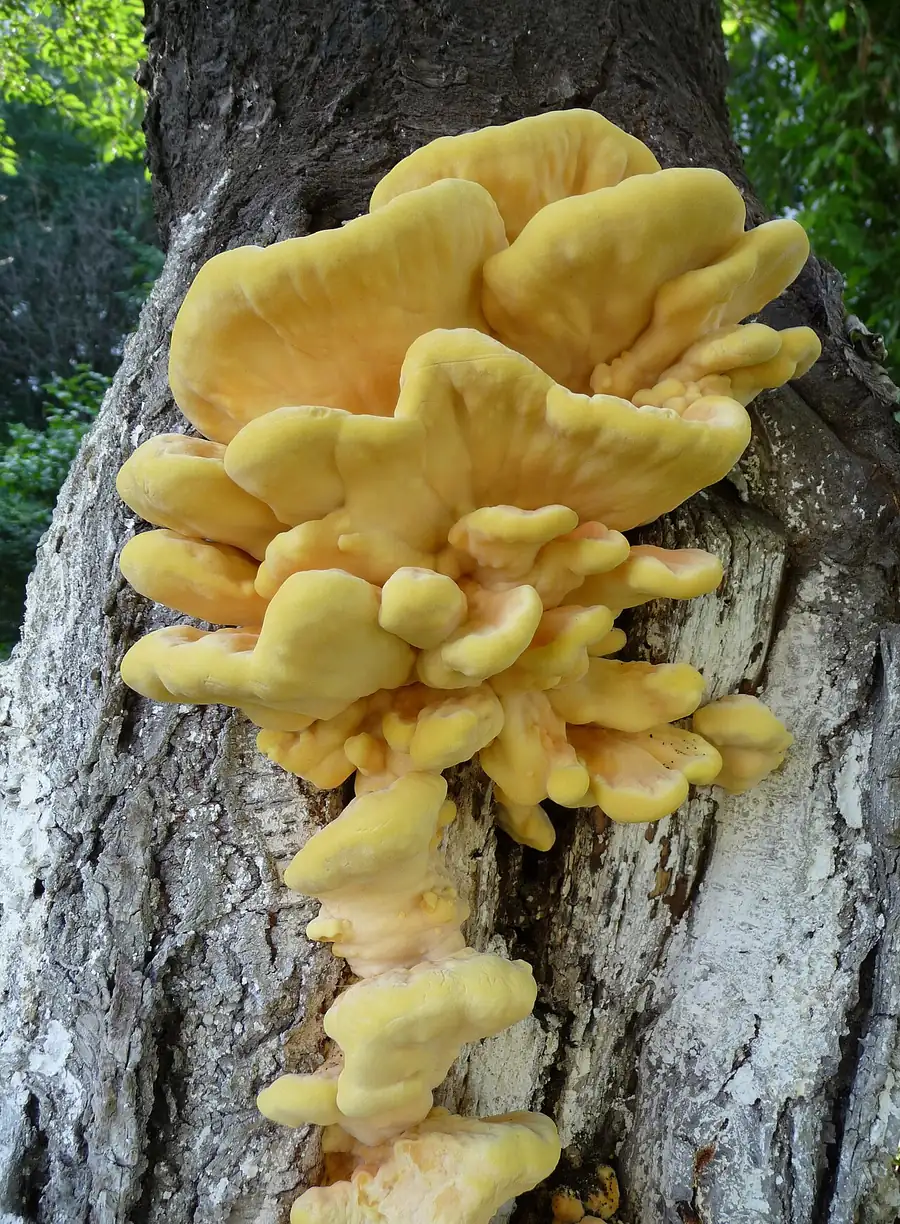
The sulphur shelf, or chicken of the woods, was first grown on an artificial substrate in a 2012 pilot-scale study, so cultivation is experimental and results are not yet reliable.
Laetiporus sulphureus is a wood-rotting fungus on deciduous trees. Researchers in Poland developed a synthetic log of oak and mixed hardwood sawdust enriched with organic and inorganic additives in 1.4 kg (dry weight) bags. After sterilization for 8 hours at 105–108 °C and inoculation with 20 g of grain spawn, the bags were colonized at 23 ± 1 °C and 65–70% air humidity. Fruiting was induced by injecting 300 mL of sterile water at 10 °C through a filter, after which primordia appeared in 5–6 days and developed into fruiting bodies 2 days later.
Cultivation parameters
Climate
| Colonization temperature | 22–24 °C |
|---|---|
| Fruiting temperature | 22–24 °C |
| Fruiting humidity | 65–68% |
| Air / CO₂ notes | In the 2012 trial bags were colonized at 23 ± 1 °C and 65–70% air humidity, then fruited at 23 ± 1 °C and 65–68% humidity with a 10-hour photoperiod; air exchange was provided to keep CO2 down. |
| Cold shock | Required — Injecting 300 mL of sterile water at 10 °C through a filter induced fruiting best; cooling the bag to 2–4 °C for 24 h also worked but less well |
Timing & substrate
| Primary substrate | Hardwood sawdust (oak, birch, alder, aspen, poplar) with organic supplements |
|---|---|
| Substrate options | Oak sawdust, Birch, alder, aspen and poplar sawdust mix |
Spawn & substrate preparation
| Substrate moisture | 40–65% |
|---|
Practical literature-range
| Best methods | Synthetic logs: supplemented sawdust blocks in bags |
|---|---|
| Difficulty | Advanced — Fruiting bodies were first produced on an artificial substrate in a 2012 pilot-scale study and one flush was reported; the method is not yet established |
Taxonomy & ecology
| Scientific name | Laetiporus sulphureus |
|---|---|
| Also known as | Chicken of the woods, Sulphur polypore |
| Family | Laetiporaceae |
| Order | Polyporales |
| Genus | Laetiporus |
| Lifestyle | Parasite |
| Natural habitat | Deciduous trees, causing a reddish-brown heart rot |
| Cultivation status | Experimental cultivation |
How to grow Sulphur Shelf, step by step
- Make the synthetic log. Blend oak and mixed hardwood sawdust with organic and inorganic supplements and fill bags (1.4 kg dry weight in the study).
- Sterilize. Sterilize for 8 hours at 105–108 °C and cool to about 21 °C.
- Inoculate and run. Add 20 g of grain spawn per bag and keep it at about 23 °C and 65–70% humidity until colonized.
- Induce fruiting. Inject 300 mL of sterile water at 10 °C through a filter, or cool the bag at 2–4 °C for 24 hours, and cut open the top of the bag.
- Fruit and harvest. Keep 23 °C, 65–68% humidity and a 10-hour photoperiod with fresh air, and harvest mature bodies.
Growing notes
Moisture of the substrate was tested between 40% and 65%; fruiting bodies appeared fastest at high organic supplementation (40–45%) and low moisture (40%). Mature bodies weighed 200–300 g. Only one flush was obtained because infection set in at the fracture site, and the biological efficiency of 15–21% is probably an underestimate. Treat this species as a research project rather than a dependable crop. This page covers cultivation only and cannot help identify wild mushrooms.
Questions about growing Sulphur Shelf
Can you grow sulphur shelf at home?
Only experimentally. A 2012 pilot-scale study was the first to report mature fruiting bodies on an artificial sawdust substrate.
What triggers fruiting?
Shocking the mycelium with cold water or low temperature. Injecting 300 mL of sterile water at 10 °C worked best; cooling at 2–4 °C for 24 hours also worked but less well.
How big do the fruiting bodies get?
200–300 g in the study.
How much does it yield?
Biological efficiency was 15–21% for one flush; a second flush was lost to infection.
Does it grow wild?
Yes, on deciduous trees, causing a reddish-brown heart rot. This page cannot help identify wild mushrooms.