

Wood Ear
Auricularia heimuer
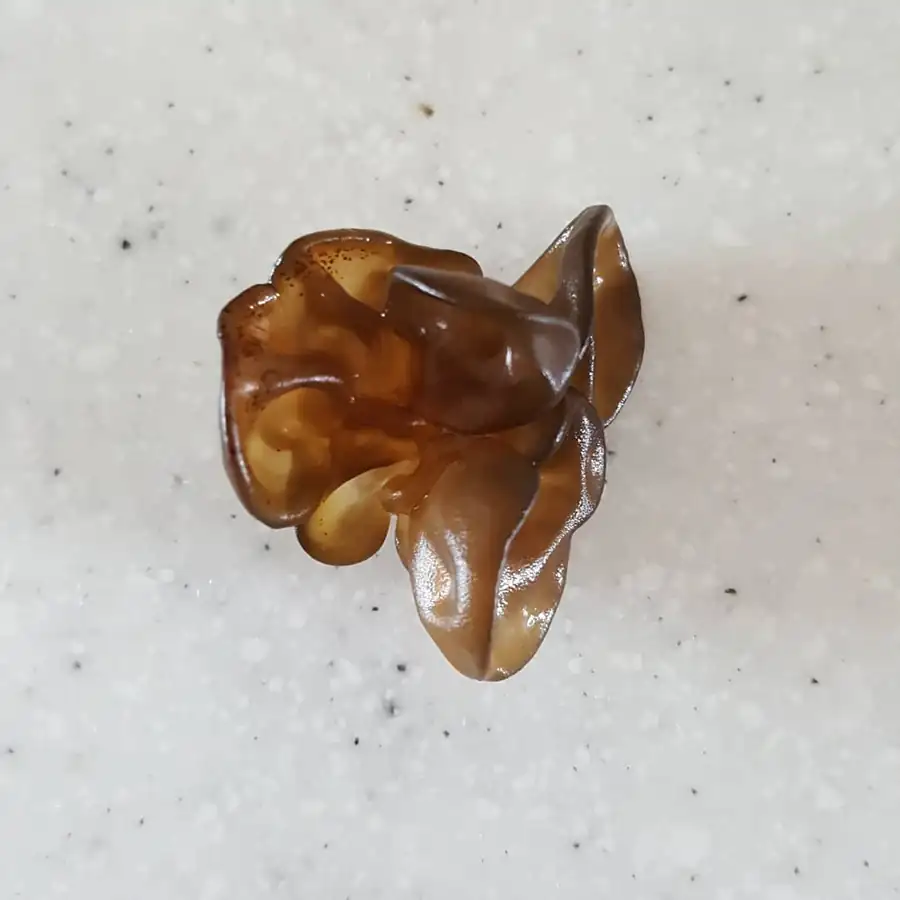
Wood ear, or black fungus, is grown on hardwood or bamboo sawdust and is commercially important in China, where it is worth over USD 4 billion a year.
Auricularia heimuer is a wood-rotting species found on the dead wood of broadleaf trees, most often oak. In cultivation, the FAO manual lists a temperature interval of 26–36 °C for the brown-black Auricularia polytricha and 26–34 °C for the pale brown A. auricula, with incubation of about four weeks and a first harvest at 4–5 weeks after inoculation. A 2025 trial in China used sawdust or bamboo sawdust at 55% moisture and pH 6.0–7.0, and kept the fruiting stage below 25 °C with frequent watering.
Cultivation parameters
Climate
| Overall cultivation temperature | 26–36 °C |
|---|---|
| Air / CO₂ notes | The FAO manual lists 26–36 °C for brown-black Auricularia polytricha and 26–34 °C for pale brown A. auricula in Thailand. A 2025 trial in China kept the fruiting stage below 25 °C and watered several times a day, stopping 1–2 days before harvest. |
| Cold shock | Not required |
Timing & substrate
| Colonization | 28 days |
|---|---|
| Primary substrate | Hardwood sawdust, bamboo sawdust |
| Substrate options | Hardwood sawdust, Bamboo sawdust, Grass plants as supplement |
Spawn & substrate preparation
| Substrate moisture | 55% |
|---|
Practical literature-range
| Best methods | Supplemented sawdust bags or sticks |
|---|---|
| Difficulty | Intermediate — Easy to colonize but slow, and the fruiting stage needs careful watering and ventilation |
Taxonomy & ecology
| Scientific name | Auricularia heimuer |
|---|---|
| Also known as | Black wood ear, Cloud ear, Black fungus, Heimuer |
| Family | Auriculariaceae |
| Order | Auriculariales |
| Genus | Auricularia |
| Lifestyle | Saprotroph |
| Natural habitat | Dead standing or fallen wood of broadleaf trees, most often oak |
| Cultivation status | Commercially cultivated |
How to grow Wood Ear, step by step
- Mix the substrate. Blend hardwood or bamboo sawdust with supplements, set the moisture to about 55% and pH to 6.0–7.0, and fill bags.
- Sterilize and inoculate. Heat-treat the bags, let them cool below 28 °C and add spawn.
- Incubate. Keep the bags clean and ventilated for about four weeks until colonized.
- Open and fruit. Cut the side of each bag, keep humidity between 75 and 90% and spray frequently, with the temperature under 25 °C if you can.
- Harvest. Stop watering 1–2 days before picking; expect the first harvest at about 4–5 weeks after inoculation.
Growing notes
Wood ear is cultivated in supplemented sawdust bags or sticks. The FAO manual advises cutting the side of the bag in several places to open it, keeping humidity between 75 and 90% and checking for mites. In the 2025 trial, water was sprayed 4–6 times a day at the early stage, reduced to 2–3 times a day while the ears grew, and stopped 1–2 days before harvest. Further flushes follow roughly every three to four weeks.
Questions about growing Wood Ear
What temperature does wood ear need?
The FAO manual gives 26–36 °C for Auricularia polytricha and 26–34 °C for A. auricula; a 2025 trial kept the fruiting stage below 25 °C.
How long does wood ear take?
Incubation takes about four weeks and the first harvest follows at about 4–5 weeks after inoculation, per the FAO manual.
What substrate does it grow on?
Hardwood sawdust is traditional; a 2025 study tested bamboo sawdust as a substitute for wood.
How much water does wood ear need?
Frequent light watering: 4–6 times a day at the early stage, 2–3 times a day later, stopping 1–2 days before harvest in a 2025 trial.
Does wood ear grow wild?
Yes, on dead standing or fallen wood of broadleaf trees, most often oak. This page covers cultivation only and cannot help identify wild mushrooms.